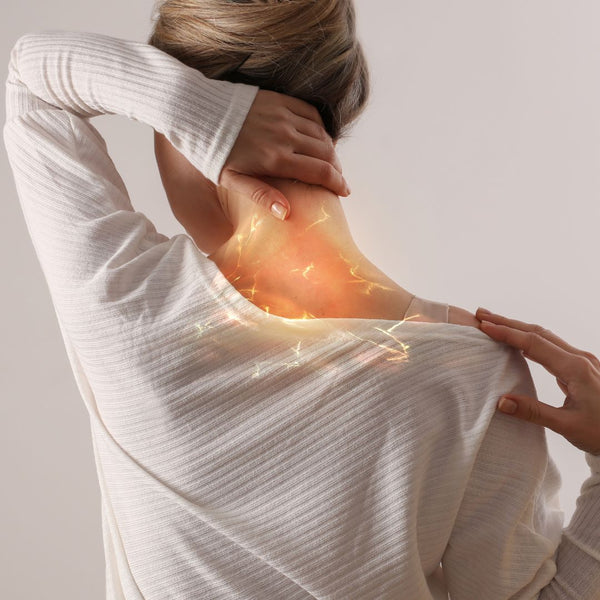
Pain between the shoulder blades most often comes from strained or tired upper-back muscles, usually from desk posture, phone use or lifting. It can also start in the neck or in the joints of the mid-back. Rarely, it's a sign of a problem in the heart, lungs or another organ, so pain with chest pressure or shortness of breath needs emergency care.
Call 911 right away if pain between your shoulder blades comes with
- chest pain, pressure or tightness
- shortness of breath or trouble breathing
- sweating, nausea or light-headedness
- pain spreading to your neck, jaw or arm
- sudden, severe pain unlike anything you've felt before
The National Heart, Lung, and Blood Institute lists discomfort in the back, shoulders, neck or jaw among heart attack symptoms, and says to call 911 even if you're not sure. Cleveland Clinic advises calling 911 for upper back pain with chest pain or trouble breathing, which could mean a heart attack or a blood clot in the lungs.
Below: the common causes, how to tell what kind of pain you have, what helps at home, and when to see a doctor.
Key takeaways
- Most pain between the shoulder blades comes from strained upper-back muscles and desk posture.
- It can also start in the neck or in the rib joints of the mid-back.
- Heat, gentle movement, a few stretches and a better desk setup help most everyday cases.
- Pain with chest pressure, shortness of breath or sweating needs 911 right away.
What causes pain between the shoulder blades?
The area between your shoulder blades is part of your thoracic spine, the stretch of back from the base of your neck to the bottom of your rib cage. Most pain here comes from the back itself, but not all of it.
Muscle strain and posture
Strained muscles are the most common cause. Cleveland Clinic lists soft-tissue strains and sprains, repetitive strain from work, and posture-related injuries among the usual causes of upper back pain. Two muscle groups do a lot of the work here: the rhomboids, which pull your shoulder blades together, and the trapezius, which runs across your upper back and neck.
Hours at a desk with your head forward and shoulders rounded keep those muscles working without a break. Lifting, reaching overhead or starting a new workout can do the same, and that kind of strain tends to feel better with gentle movement and worse after sitting still.
Problems in the neck
The source isn't always where you feel it. In a study that mapped pain from irritated discs in the neck, discs from the middle to the lower neck often produced pain between the shoulder blades. If your pain comes with neck stiffness, headaches or tingling into an arm, the neck may be involved.
Mid-back joints and ribs
Your ribs join your spine at small joints that can become stiff or irritated. People often describe this as a "stuck" spot, or pain that changes when they breathe in or twist.
Sleep position and stress
Sleeping on your front with your head turned, a worn-out mattress, or a stressful stretch at work can all add to upper back tension.
Less common: pain from organs
Pain can be "referred" to your back from organs inside your body. Cleveland Clinic gives these examples:
- Esophagus: a spasm can feel like a twisting pain right between the shoulder blades.
- Heart: angina can be felt in the back.
- Lungs: conditions such as pleurisy can cause back pain when you breathe.
- Spleen: a sudden, sharp pain between the shoulder blades can signal a ruptured spleen.
Referred pain usually comes on without an injury you can point to. That's one reason sudden, unexplained pain here deserves attention.
What kind of pain is it?
This table can help you think through your symptoms. It isn't a diagnosis.
| How it feels | What it often points to | What to do |
| Dull ache after a long day at a desk | Muscle strain and posture | Home care below; change your setup |
| Sharp pain when you move or reach | A strained muscle or irritated joint | Rest from the trigger, gentle movement |
| Burning or tingling that runs into an arm | Possibly a nerve in the neck | See a doctor if it lasts or you feel weak |
| Worse when you breathe in or twist | Rib joints, or sometimes the lungs | See a doctor, sooner if you're short of breath |
| With chest pressure, shortness of breath or sweating | Possible heart attack or blood clot | Call 911 |
How to relieve pain between the shoulder blades at home
If your pain came on after desk work, lifting or sleeping awkwardly and you feel otherwise well, these steps can help. Go gently, and stop anything that makes it sharper.
- Use heat for tight muscles. Cleveland Clinic notes that heat can help loosen muscle knots by increasing blood flow, and advises keeping warming sessions under 20 minutes at a time. Put a layer between the heat and your skin, and never fall asleep with a heating pad on.
- Keep moving gently. Strain like this often feels better with gentle movement and worse after long periods of sitting still. Cleveland Clinic notes that upper back pain often goes away on its own with rest, so rest from what caused it without lying in bed all day.
- Fix your setup. Bring your screen to eye level and stand up every 30 to 45 minutes. More on this in the desk reset below.
- Try pain relief if it suits you. Follow the label, and ask a pharmacist first if you take other medicines or have a health condition.
- Work on the knot. Gentle massage, or leaning against a wall with a massage ball between your shoulder blade and the wall, can ease a tight spot.
If you'd like hands-free heat while you sit, the Callixe Thera Wrap is a wearable wrap that gives heat and vibration around the neck and shoulders.

A wearable wrap with heat and vibration for the neck and shoulders.
£37.004 stretches between the shoulder blades
Hold each stretch for about 20 to 30 seconds and breathe slowly. You should feel a gentle stretch, not pain.
- Rhomboid stretch (self-hug). Cross your arms and hold opposite shoulders, then round your upper back slightly and let your shoulder blades spread apart.
- Thread the needle. On hands and knees, slide one arm under your body along the floor, letting that shoulder and the side of your head rest down. Switch sides.
- Doorway chest stretch. Arms in a goalpost shape on a door frame, then step forward until you feel the front of your chest open. Tight chest muscles pull the shoulders forward and load the muscles behind them.
- Shoulder blade squeezes. Sit tall, squeeze your shoulder blades together and down, hold for a few seconds, then relax. Repeat 10 times.
For a longer routine that covers the whole upper and middle back, see our 10 upper back stretches.
A 5-minute desk reset
Posture is the most common trigger seen in clinics, so small changes add up.
- Screen at eye level, so your head stays over your shoulders.
- Elbows close to your sides and your chair close enough to the desk that you don't reach forward.
- A break every 30 to 45 minutes: stand up, roll your shoulders back and down, do 5 shoulder blade squeezes and a few slow chin tucks.
If you spend hours on your phone or laptop, our guide to tech neck covers the posture pattern behind a lot of upper back pain.
Could it be your neck?
Think about your neck if your shoulder-blade pain changes when you move your head, or comes with neck stiffness, headaches, or tingling into your arm. In that case, neck care may help more than working on your upper back alone. Our guides to neck and shoulder pain and neck pain relief at home are good next reads.
When to see a doctor
Beyond the emergency signs at the top of this page, Cleveland Clinic advises getting care for upper back pain when:
- it doesn't get better after a week
- you have tingling or numbness in your buttocks, legs or feet
- you have a fever or unexplained weight loss
Get emergency care for muscle weakness in your legs, or loss of bladder or bowel control. Also see a doctor if your pain started after a fall or accident, or wakes you at night.
FAQ
What could be causing pain between my shoulder blades that won't go away?
Ongoing pain is often posture- or muscle-related, but it can also come from the neck, the rib joints or, less often, organs such as the esophagus, heart or lungs. If it hasn't improved after a week, see a doctor.
Can pain between the shoulder blades be a heart attack?
It can. The National Heart, Lung, and Blood Institute lists discomfort in the back, shoulders, neck or jaw as possible heart attack symptoms. If the pain comes with chest pressure, shortness of breath, sweating, nausea or light-headedness, call 911, even if you're not sure.
Why does it hurt between my shoulder blades when I breathe?
Pain that changes with breathing often comes from the rib joints or the small muscles between the ribs. Lung conditions such as pleurisy can also cause back pain when you breathe. If you're short of breath, get help straight away.
How should I sleep with pain between my shoulder blades?
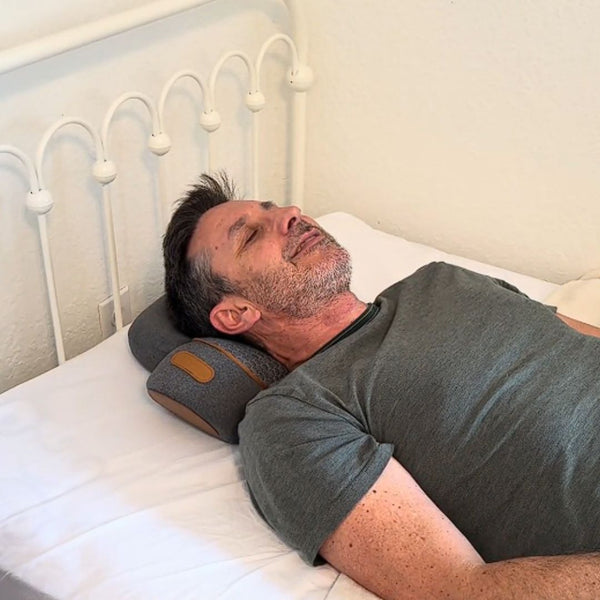
Sleep on your back or side rather than your front, with a pillow that keeps your neck in line with your spine. Our guide to the sleep setup for rounded shoulders shows how to keep your shoulders open at night.
Stretches for the whole upper back
If your pain is mostly muscular, regular stretching and strengthening is one of the best long-term fixes. Our guide to upper back stretches: 10 moves for upper and mid-back pain builds on the four moves above.
This article is for general information and isn't a substitute for advice from your doctor or physical therapist. If you're unsure about your symptoms, get them checked.
Sources
- Cleveland Clinic, "Upper Back Pain" (medically reviewed, last updated 21 Jan 2026). https://my.clevelandclinic.org/health/symptoms/22866-upper-back-pain (accessed 4 Nov 2026)
- National Heart, Lung, and Blood Institute, "Heart Attack: Symptoms." https://www.nhlbi.nih.gov/health/heart-attack/symptoms (accessed 5 Nov 2026)
- Maryland Chiropractic & Physical Medicine, "Upper Back Pain Between the Shoulder Blades" (23 Oct 2026). https://chiropractorcareedgewatermd.com/blog/upper-back-pain-between-shoulder-blades-edgewater-md (accessed 4 Nov 2026)
- Slipman CW, et al. "Provocative cervical discography symptom mapping." Spine J. 2005;5(4):381-388. PMID 15996607. https://pubmed.ncbi.nlm.nih.gov/15996607/
- Cleveland Clinic Health Essentials, "Should You Use Ice or Heat for Pain?" https://health.clevelandclinic.org/should-you-use-ice-or-heat-for-pain-infographic (accessed 4 Nov 2026)