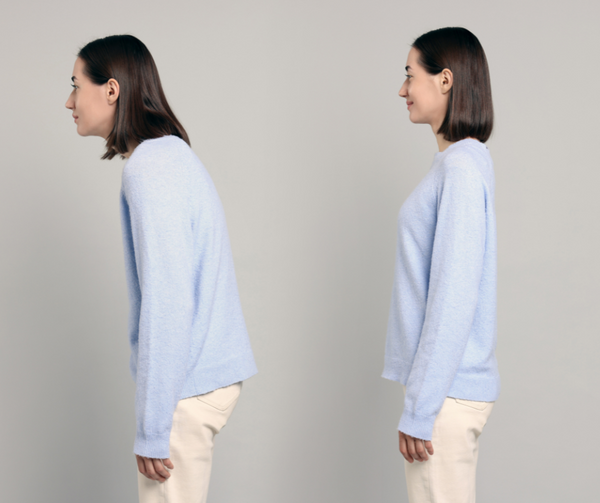
Upper back stretches are gentle movements that loosen the muscles between your shoulder blades and around the upper spine, such as cat-cow, thread-the-needle, a doorway chest stretch and a seated twist. Done slowly and without pain, a short routine most days may help ease the stiffness that builds up from sitting and screen work.
If your upper back feels tight after a day at a desk or an evening on your phone, you're not alone. Your upper back runs from the base of your neck to the bottom of your rib cage, and this part of your spine (the thoracic spine) includes your middle back too. It's built mainly for structure and support, so it doesn't bend and turn as much as your neck or lower back.
This guide gives you a simple routine, extra stretches for the middle of your back, desk versions, and advice on how often to stretch. One thing first: Cleveland Clinic lists posture and repetitive strain among the common causes of upper back pain, but pain here can also come from the heart or lungs. Read the "when to see a doctor" section before you rely on stretching for new or unexplained pain.
Key takeaways
- A short routine of slow, pain-free stretches most days may help ease upper back stiffness from sitting and screens.
- Hold each stretch without bouncing; about 60 seconds per stretch in total is a common target.
- Desk versions let you loosen up during the workday without getting on the floor.
- Upper back pain can also come from the heart or lungs, so new or unexplained pain needs a doctor first.
How to stretch your upper back: a 6-move routine
Start with gentle moving stretches, then move to stretches you hold. Harvard Health recommends dynamic (moving) stretches to loosen up first and static (held) stretches once your muscles are warm. Start each exercise slowly and ease off if you start to have pain; you're aiming for gentle tension, never pain.
1. Shoulder rolls
Stand or sit up straight with your chin slightly tucked and your arms relaxed. Roll your shoulders up, back, down and forward in a smooth circle, at least 2 to 4 times. Then switch direction for another 2 to 4 circles.
2. Cat-cow
Come onto your hands and knees, with your hands under your shoulders and your knees under your hips. Breathe in as you let your belly drop and gently arch your back (cow). Breathe out as you round your spine, tuck your chin and let your shoulder blades move apart (cat). Hold each position for a full breath and repeat 5 to 10 times. Keep your neck long; don't throw your head back.
3. Upper back (rhomboid) stretch
Sit in a firm chair or stand tall. Clasp your hands in front of you at about shoulder height, drop your chin toward your chest, and reach forward so your upper back rounds. Think about pulling your shoulder blades apart. You should feel a stretch across your upper back and shoulders. Hold for 15 to 30 seconds and repeat 2 to 4 times.
4. Child's pose
Kneel on the floor and sit back on your ankles. If that bothers your knees, put a pillow or folded blanket between your ankles and your bottom. Lean forward, place your hands on the floor and stretch your arms out in front of you, resting your head between your arms. Gently push your chest toward the floor. Hold for 15 to 30 seconds and repeat 2 to 4 times.
5. Thread-the-needle
Start on all fours again. Lift one hand and reach it underneath your body toward the opposite side, letting that shoulder lower toward the floor and allowing your chest and head to turn with you. Twist only as far as is comfortable, hold, then slowly come back and switch sides. For an easier version, rest your forearm on the floor instead of reaching all the way under. Harvard Health notes that static stretches are usually held for 10 to 30 seconds.
6. Doorway chest stretch
Tight chest muscles can pull your shoulders forward, so it helps to open up the front as well as the back. Stand beside a doorway, put one hand on the edge of the door frame slightly below shoulder level, and keep your shoulders down and back. Slowly turn your body away from the frame until you feel a stretch in your chest and shoulder. Hold for 10 to 30 seconds, repeat 3 to 4 times, then switch sides.
If your shoulders tend to round forward through the day, you may also find it useful to read about how poor posture can lead to back pain over time.
Stretches for the upper-middle back
If your stiffness sits lower, between and just below your shoulder blades, these four moves work the middle part of your thoracic spine. Add them to the routine above or do them on their own.
7. Seated twist
Sit sideways on a chair so that one side of your body rests against the chair back. Keep your legs still and turn your upper body toward the chair back, holding it with your hands to ease a little further as your muscles loosen. Hold for 10 seconds, then repeat 3 times on each side.
8. Side stretch
Sit or stand up straight (if standing, keep your feet about hip-width apart). Raise one arm over your head and lean to the other side, sliding your other hand down your leg. If you're sitting, keep your bottom flat on the chair. Hold for 15 to 30 seconds, switch sides, and repeat 2 to 4 times on each side.
9. Press-up back extension
Lie on your stomach, propped on your forearms with your elbows below your shoulders. Press your elbows into the floor to lift your upper back, letting your back arch while your stomach muscles relax. Keep your hips on the floor. Hold for 15 to 30 seconds, then relax, and repeat 2 to 4 times.
10. Chair back extension
Sit facing forward in a chair with a low, sturdy back and let your upper body lean back over the top of the chair, then reach your arms overhead for a deeper stretch. Hold for 5 seconds, release, and repeat 3 times. Only lean back as far as feels comfortable.
Desk-friendly versions
If you sit for long stretches, short movement breaks may help. A 2026 review of six small trials (210 people) found that bouts of activity lasting 2 to 10 minutes, including stretching, eased discomfort from long sitting in four of the six studies, though most studies had a high risk of bias. Think of it as a sensible habit, not a guaranteed result. Try these in your chair:
- Seated cat-cow. Sit tall with your feet flat and your hands on your thighs. Breathe in as you draw your shoulder blades together, lift your chest and gently arch your back. Breathe out as you round your spine and tuck your chin. Cleveland Clinic advises extra care with the seated version, because there's less freedom of movement in a chair.
- Seated upper back stretch. Do move 3 (clasp your hands, drop your chin, reach forward and round your upper back) right in your chair. Hold for 15 to 30 seconds and repeat 2 to 4 times.
- Overhead stretch. Sit up straight, look ahead, and raise both arms over your head, reaching up and back until you feel a stretch in your shoulders. Don't let your head tilt back. Hold for 15 to 30 seconds and repeat 2 to 4 times.
- Chair twist and shoulder rolls. The seated twist (move 7) and shoulder rolls (move 1) both work in a desk chair.
If your head also drifts forward toward the screen, our guide to forward head posture and how to work on it at home covers the neck side of the same pattern. And if the tightness spreads up into your neck and the tops of your shoulders, see our guide to shoulder and neck tension.
How often to do upper back stretches
- At least two to three times a week. An American College of Sports Medicine expert panel recommends flexibility exercises for all major muscle groups, including the neck, shoulders, chest and trunk, at least two to three times a week.
- Daily if you're very stiff. A Harvard-affiliated rehabilitation specialist suggests stretching the shoulders three to seven times a week, and daily if you're really stiff.
- About 60 seconds per stretch in total. For example, four 15-second holds or three 20-second holds.
- No bouncing. Bouncing can trigger a reflex that makes the muscle tighten instead of lengthen.
- Give it time. A Cleveland Clinic physical therapist suggests giving a routine a couple of weeks or more before you expect significant changes.
Add a little strength
Stronger upper back muscles can make it easier to hold a comfortable position. The Healthwise handout behind the routine above includes three simple strength moves:
- Wall push-up. Stand facing a wall with your feet 12 to 24 inches away and your hands on the wall at shoulder height. Bend your elbows to bring your face toward the wall, then push back. Repeat 8 to 12 times.
- Resisted shoulder-blade squeeze. Hold an exercise band in front of you with your elbows bent at your sides. Squeeze your shoulder blades together as you move your hands outward to stretch the band. Repeat 8 to 12 times.
- Resisted row. Anchor a band at about waist height, hold one end in each hand and pull back, moving your shoulder blades toward each other. Repeat 8 to 12 times.
Rest and recovery
Kaiser Permanente's back stretch handout ends with a "supported rest": lying on your back with a rolled towel under your neck and your knees supported by pillows or folded blankets, breathing normally. The NHS also suggests a heat pack or hot water bottle wrapped in a tea towel to help ease stiffness or muscle spasms. For more ideas, see our guide to home remedies for back pain without medication.
If you'd like more structured support when you lie down to rest, the Thera Back Pillow is one optional extra. It has three modes (traction, heat and vibration), its traction lifts at a 26° angle, it measures 23.6" x 9.8" x 4.7", and its rechargeable battery charges fully in about 90 minutes. It isn't a treatment for upper back pain and doesn't replace stretching, strengthening or professional care. If you have a diagnosed spine condition, ask your doctor before using any traction device.

A back pillow with 3 modes: traction that lifts at 26°, heat and vibration.
$139.00If your shoulders also round forward at night, read our guide on sleeping to help rounded shoulders.
When to see a doctor or physical therapist
Stiffness from sitting and screen work is usually something you can work on at home. But upper back pain can come from other parts of the body, and the NHS lists pain coming from the top of your back, between your shoulders, as a reason to see a doctor.
When to see a doctor or physical therapist
- Your pain doesn't get better after a week, or after a few weeks of looking after it at home.
- The pain is stopping you from doing your day-to-day activities, or you're worried about it.
- You have a fever, feel hot, cold, shivery or generally unwell, or you've lost weight without trying.
- The pain is worse at night, doesn't improve with rest, or there's a lump or swelling in your back or it has changed shape.
- The pain is severe, started suddenly, or is getting worse quickly.
- Any stretch makes your pain worse rather than easing into a gentle stretch.
Call 911 or go to the emergency room if
- You have chest pain, trouble breathing or any symptoms that could be a heart attack.
- The pain started after a serious accident, such as a car accident.
- You have weakness, numbness or tingling in one or both legs, or you can't control your bladder or bowels.
A physical therapist can work out what's driving your stiffness; Cleveland Clinic lists physical therapy to improve strength and posture among the options a provider may suggest. If your neck is sore as well, our guide to neck pain relief at home covers the basics.
FAQ
How do you stretch your upper back?
Start with a few moving stretches to warm up, such as shoulder rolls and cat-cow, then hold gentle stretches like the upper back (rhomboid) stretch, child's pose, thread-the-needle and a doorway chest stretch. Hold most stretches for 15 to 30 seconds and repeat them 2 to 4 times. Move slowly and ease off if anything hurts.
How do you stretch your upper middle back?
Stretches that twist or gently extend your spine reach the middle of your back. Try a seated twist, a side stretch, a press-up back extension on your forearms, or leaning back over a sturdy chair. Thread-the-needle also works the area between your shoulder blades.
How long should you hold an upper back stretch?
Most clinical handouts suggest 15 to 30 seconds per hold, repeated 2 to 4 times. Harvard Health notes that static stretches are usually held for 10 to 30 seconds, and an expert panel suggests about 60 seconds in total per stretch, split across several holds.
How often should you do upper back stretches?
Aim for at least two to three times a week. If you're very stiff, daily stretching is fine as long as it stays gentle and pain-free. Short breaks to move during long periods of sitting may also help with discomfort.
Can stretching make upper back pain worse?
It can if you push too hard. A stretch should feel like mild tension, not pain, and you should back off if pain starts. If your pain gets worse, started after an injury, or comes with symptoms like chest pain, fever or numbness, stop stretching and get checked.
Sources
- Kaiser Permanente Health Encyclopedia (Ignite Healthwise, LLC), "Healthy Upper Back: Exercises" (current as of 24 Sept 2026). https://healthy.kaiserpermanente.org/health-wellness/health-encyclopedia/he.healthy-upper-back-exercises.zp4447 (accessed 30 Oct 2026)
- Kaiser Permanente Health Encyclopedia (Ignite Healthwise, LLC), "Back Stretches: Exercises" (current as of 24 Sept 2026). https://healthy.kaiserpermanente.org/health-wellness/health-encyclopedia/he.back-stretches-exercises.ad1476 (accessed 30 Oct 2026)
- Cleveland Clinic Health Essentials, "Cat-Cow Stretch: A Gentle Move With Big Benefits" (19 Nov 2025). https://health.clevelandclinic.org/cat-cow-stretch (accessed 30 Oct 2026)
- Hinge Health, "How to do a thread the needle exercise: a Hinge Health guide," clinically reviewed by a physical therapist (updated 1 Sept 2025). https://www.hingehealth.com/resources/articles/thread-the-needle/ (accessed 30 Oct 2026)
- Harvard Health Publishing, "4 stretches to keep your shoulders in shape" (1 Aug 2019). https://www.health.harvard.edu/healthy-aging-and-longevity/4-stretches-to-keep-your-shoulders-in-shape (accessed 30 Oct 2026)
- Harvard Health Publishing, "The ideal stretching routine" (16 Mar 2026). https://www.health.harvard.edu/staying-healthy/the-ideal-stretching-routine (accessed 30 Oct 2026)
- Harvard Health Publishing, "Take time to stretch" by Julie Corliss (1 Aug 2024). https://www.health.harvard.edu/healthy-aging-and-longevity/take-time-to-stretch (accessed 30 Oct 2026)
- Cleveland Clinic, "Upper Back Pain" (medically reviewed, last updated 21 Jan 2026). https://my.clevelandclinic.org/health/symptoms/22866-upper-back-pain (accessed 30 Oct 2026)
- NHS, "Back pain" (page last reviewed 5 Mar 2026). https://www.nhs.uk/conditions/back-pain/ (accessed 30 Oct 2026)
- Zeng J, Lei D, Gao M, Li Y, Aslam S, Zhang W. "Can exercise snacks alleviate musculoskeletal discomfort in prolonged sitting? A systematic review of randomized controlled trials." BMC Public Health, 2 May 2026. https://doi.org/10.1186/s12889-026-27292-6 (abstract read via Europe PMC, PMC13285421; accessed 30 Oct 2026)
- Cleveland Clinic Health Essentials, "These Lower Back Stretches and Exercises Can Help Relieve Pain" (12 Feb 2025). https://health.clevelandclinic.org/exercises-and-stretches-for-low-back-pain (accessed 30 Oct 2026)
- Healthline, "19 Exercises for Upper Back Pain, Neck Pain, Tight Shoulders," medically reviewed by Gregory Minnis, DPT (updated 28 Jan 2026). https://www.healthline.com/health/fitness-exercise/upper-back-pain-exercises (accessed 30 Oct 2026)