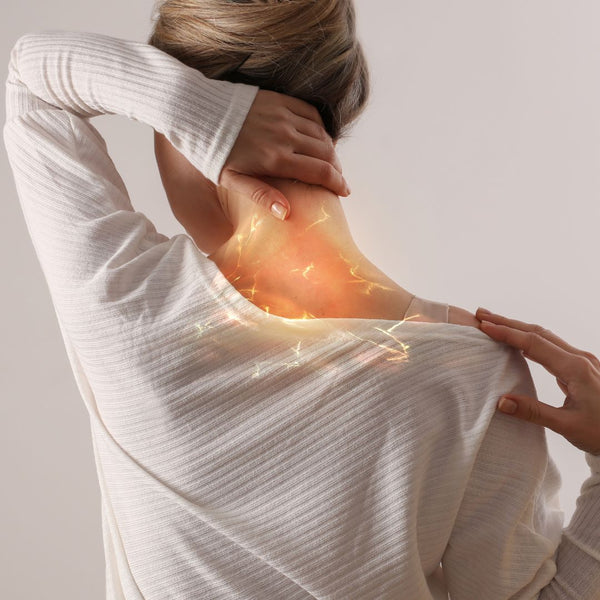
Trapezius stretches are gentle neck, shoulder and upper-back moves that loosen the trapezius muscle and can ease tension. The trapezius is a large, triangular muscle that runs from the base of your skull across your shoulders and down to the middle of your back. The trapezius moves and steadies your shoulder blades and helps you tilt and turn your head. Tension tends to settle in the upper part of the muscle, between your neck and your shoulders. Long hours hunched at a desk and stress are two common reasons your traps feel tight. The most common trapezius stretches are the ear-to-shoulder stretch, shoulder shrugs, the across-body stretch, cat-cow and thread the needle. Hold each stretch for 20 to 30 seconds without bouncing, and stop if it hurts.
Below: why traps get tight, 8 trapezius stretches with steps and hold times, how often to stretch, when to see a doctor and answers to common questions.
Key takeaways
- Trapezius stretches are gentle moves that can ease tension between your neck and shoulders.
- Posture, stress and overuse are the most common reasons your traps feel tight.
- Hold each stretch for 20 to 30 seconds without bouncing, and stretch daily if you can.
- See a doctor if pain lasts more than a week or comes with numbness, tingling or weakness.
Why do your traps get tight?
Your traps get tight mostly from posture, stress and overuse. The trapezius has three parts, upper, middle and lower, and each one helps move your neck and shoulders. That workload makes it an easy place for tension to build.
- Posture. Slouching at a desk, in the car or on the couch can strain your traps. Sitting hunched with your shoulders raised, for example over a keyboard, keeps the muscle working for long stretches.
- Stress. Stress can make you tense your shoulders, upper back and neck without noticing. Hinge Health links stress to more trapezius activity and a lower pain tolerance.
- Overuse and strain. Repetitive shoulder work, such as swimming or heavy lifting, can overload the muscle. So can carrying a heavy bag on one shoulder or reaching overhead often.
- Injury or nerve problems. A muscle tear, whiplash or a pinched nerve can also cause pain or tightness in the traps.
Tight traps often go hand in hand with neck pain. Read more about the causes of neck and shoulder tension.
8 trapezius stretches to loosen tight traps
The 8 trapezius stretches below cover the upper, middle and lower parts of the muscle. Start with the first three if you're at a desk. Move gently, breathe normally and stretch to mild tension, not pain.
1. Ear-to-shoulder stretch (upper trapezius stretch)
Sit or stand tall with your shoulders relaxed. Slowly tilt your right ear toward your right shoulder. If your left shoulder lifts, ease your head back until it relaxes. For a deeper stretch, rest your right hand on the left side of your head with only slight pressure, and don't pull. Hold for 20 to 30 seconds, then switch sides, for 2 to 3 rounds.
2. Shoulder shrugs
Sit or stand tall. Lift both shoulders up toward your ears, hold for a moment, then let them drop. Do 10 to 15 shrugs. At a desk, Hinge Health suggests a quick reset every 30 minutes: lift your shoulders toward your ears, then press your shoulder blades down and back.
3. Across-body stretch
Raise your right arm to shoulder height and bring it across your chest. Hook your left arm around it just above the elbow and draw it toward your chest. Hold for 20 to 30 seconds, then switch sides, for 2 to 3 rounds. Medical News Today describes a "hug" version that adds a gentle head tilt away from the arm, held for about 20 seconds.
4. Chin tuck
Stand or sit comfortably with your jaw relaxed. Draw your chin straight back, then relax. Hinge Health includes chin tucks because a stronger neck takes some load off the upper traps. Our guide to chin tucks covers the technique and the common mistakes.
5. Cat-cow
Start on your hands and knees, with your hips over your knees and your shoulders over your wrists. Breathe in as you lift your head and chest and let your belly sink. Breathe out as you round your spine and let your head drop. Focus on the area between your shoulder blades. Do 10 to 15 slow rounds.
6. Thread the needle
Start on your hands and knees. Slide your right arm under your body toward the left until your right shoulder and cheek rest on the floor. This rotation stretches the middle traps. Hold for 20 to 30 seconds, then switch sides. Repeat 2 to 3 times per side.
7. Child's pose
From your hands and knees, sit your hips back toward your heels. Lower your chest toward the floor and let your head relax. Hold for 20 to 30 seconds and repeat 2 to 3 times.
8. Cobra pose
Lie face down with your hands beside your shoulders and your elbows close to your body. Press the tops of your feet down, breathe in and lift your head and chest. Lift your head only slightly, so your neck follows the curve of your spine. Roll your shoulders back and down, hold for a few breaths, then lower on a breath out. Repeat at least two more times.
Stretching works best alongside strengthening. Hinge Health pairs these stretches with band rows and arm raises that work the middle and lower traps. For more moves for the area below your neck, see these stretches for upper back pain.
How often should you do trapezius stretches?
Do trapezius stretches daily if you can, or at least 3 to 4 times a week. A few short sessions spread through the day work well, such as 2 minutes of stretches in the morning, at noon and at night.
The research on office workers supports a regular routine. In a trial of 96 office workers with neck pain, one group did neck and shoulder stretches twice a day, 5 days a week, for 4 weeks. Both groups also got ergonomics advice. The stretching group improved more in pain, neck function and quality of life. People who stretched at least 3 times a week saw bigger gains than those who stretched less.
Warm your muscles before you stretch. Harvard Health says stretching cold muscles can hurt them, and a few minutes of light activity, such as a quick walk, is enough. Heat is another option once the first 2 to 3 days of a new strain have passed. The NHS suggests a wrapped hot water bottle for 20 minutes, 2 to 3 times a day. Never fall asleep with a heating pad on.
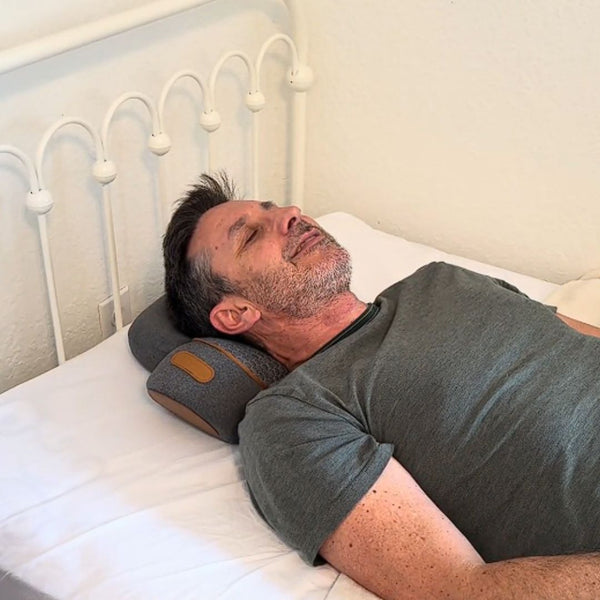
If you like warmth before you stretch, the Thera Wrap is a heated wrap with vibration. It has 3 heat levels (113°F, 131°F and 149°F) and a timer you can set to 30, 60 or 90 minutes. Start on the lowest level, then stretch once your muscles feel warm. The Thera Wrap is an optional comfort aid, not a replacement for stretching.

A heated wrap with vibration and 3 heat levels.
$70.00When to see a doctor about trap pain
See a doctor if trap pain lasts more than a week or comes with other symptoms. Some signs need a check-up sooner.
See a doctor if
- Pain in your back, neck or the back of your head lasts more than a week.
- You have weakness, such as being unable to shrug or raise your arm, or swelling or bruising in your shoulders, neck or back.
- You have numbness, tingling or weakness in your arm or hand.
- Your pain started after a fall, blow or injury, or it wakes you at night.
- Call 911 for heart attack symptoms, such as shortness of breath, sweating, nausea, or arm or jaw pain. Also call 911 for a fever and headache with a neck so stiff you can't touch your chin to your chest.
A physical therapist can check your form and suggest stretches that suit you. Here are more signs that neck pain needs a doctor.
This article is for general information and isn't medical advice. Talk to your doctor or a physical therapist before starting a new exercise routine, especially if you have an injury or a health condition.
FAQ
Can tight traps cause headaches?
Tight traps may play a part in tension-type headaches. Cleveland Clinic lists aching or tight scalp, neck and shoulder muscles as a symptom, and poor posture and neck strain as triggers. Read more about how neck pain can trigger headaches.
Why are my traps so tight when I wake up?
Your sleep position is a likely reason. The NHS lists sleeping with your neck locked in an awkward position as a common cause of neck pain. It suggests a low, firm pillow, keeping your head level with your body and not sleeping on your front. See our guide to neck pain from sleeping.
Should I use heat or ice on tight traps?
Use ice for a new strain and heat for ongoing tightness. MedlinePlus advises ice for the first 48 to 72 hours, then heat. Heat may ease muscle spasms and increase blood flow.
Should you stretch your traps if they hurt?
You can stretch tight traps gently, but a stretch should never hurt. Stretch to tension, not pain, and stop if a stretch hurts. If you've strained the muscle, rest from painful activities first. Go over new stretches with a physical therapist or doctor if you're unsure.
Sources
- Healthline, "Stretches to Loosen Your Trapezius Muscles" (written by Gretchen Stelter; medically reviewed by Daniel Bubnis, M.S., NASM-CPT; updated 13 Oct 2026). https://www.healthline.com/health/fitness-exercise/trapezius-stretches (accessed 11 Nov 2026)
- Hinge Health, "7 best trap stretches to loosen a tight trapezius" (reviewed by Cody Anderson, PT, DPT; Jonathan Lee, MD, MBA; Dylan Peterson, PT, DPT; 23 Jul 2024). https://www.hingehealth.com/resources/articles/trapezius-pain-exercises/ (accessed 11 Nov 2026)
- Medical News Today, "Trapezius (traps) muscle: Anatomy, stretches, pain, function, and more" (MaryAnn De Pietro, CRT; medically reviewed by Daniel Wiznia, MD; updated 10 Nov 2023). https://www.medicalnewstoday.com/articles/324251 (accessed 11 Nov 2026)
- Peloton, "Trap Stretches" (Leigh Weingus, with physical therapist Devin Trachman and instructor Hannah Corbin; 2 Aug 2024). https://www.onepeloton.com/blog/trap-stretches (accessed 11 Nov 2026)
- Cleveland Clinic, "Trapezius Muscle" (medically reviewed; last updated 18 Sep 2024). https://my.clevelandclinic.org/health/body/21563-trapezius-muscle (accessed 11 Nov 2026)
- Harvard Health Publishing, "The importance of stretching" (reviewed by Howard E. LeWine, MD; 17 Apr 2024). https://www.harvardhealth.org/staying-healthy/the-importance-of-stretching (accessed 11 Nov 2026)
- Tunwattanapong P, Kongkasuwan R, Kuptniratsaikul V. "The effectiveness of a neck and shoulder stretching exercise program among office workers with neck pain: a randomized controlled trial." Clin Rehabil. 2016;30(1):64-72. PMID 25780258. https://pubmed.ncbi.nlm.nih.gov/25780258/
- MedlinePlus Medical Encyclopedia, "Neck pain" (U.S. National Library of Medicine; reviewed 14 Jan 2026 by Linda J. Vorvick, MD). https://medlineplus.gov/ency/article/003025.htm (accessed 11 Nov 2026)
- NHS, "Neck pain" (last reviewed 27 Apr 2023). https://www.nhs.uk/conditions/neck-pain/ (accessed 11 Nov 2026)
- Cleveland Clinic, "Tension Headaches" (medically reviewed; last updated 5 Oct 2026). https://my.clevelandclinic.org/health/diseases/8257-tension-type-headaches (accessed 11 Nov 2026)